The Solutions framework gives you the policy architecture. This is the street-level companion - the specific, practical proposals that Valletta residents have been putting forward since 2015. Parking permits, drone regulations, loudspeaker controls, anti-clientelism measures. Nothing here is abstract. Everything here has been lived.
These proposals come from people who navigate Valletta's streets every day - who cannot find parking near their own homes, who are woken at night by tourist loudspeakers, whose privacy is invaded by commercial drones, and who have watched for years as a patronage system distributes favours to the connected while ignoring everyone else.
What follows is not a wish list. It is a blueprint - detailed, practical, and ready to implement. All of it was formally proposed by ResidentiBeltin to the local council, members of parliament, and government entities. All of it was ignored.
Parking: 17 Proposals for Streets That Work
In February 2019, ResidentiBeltin submitted a comprehensive parking reform plan with 17 specific proposals. Anyone who has driven through Valletta knows the problem: residents cannot park near their own homes because spaces have been systematically reallocated to commercial uses, government offices, and visitors - while the people who actually live there circle the streets.
The core principle is simple: the inner ring of Valletta's streets should be fully reserved for residential parking, while the outer ring serves visitors, deliveries, events, and relatives. Zone allocations would be decided through public meetings with the residents of each area - not imposed from above.
The specifics:
- Increase residential parking with per-capita allocations that reflect actual resident needs
- Two-zone system: outer ring for visitors (white and blue parking), inner ring exclusively residential. Zone boundaries set through consultation with residents
- Clamping for violators. Restore residential spots removed by previous administrations who merely relocated them, creating new injustice
- Temporary permits for residents whose vehicles are in repair and who are using rental cars - so they are not fined for circumstances beyond their control
- Family visit permits for relatives visiting residents, especially the elderly. Special permits for illness and urgent situations. No system should isolate residents by punishing those who come to visit them
- Priority access for essential services: strategic parking for nurses, doctors, veterinarians, police, and civil protection members doing home visits - especially for elderly residents and parents
- Regular permit audits to prevent abuse of invalid or expired permits. Community management working with enforcement entities
- Visible permit display on vehicle windscreens for easy identification of authorized vehicles
- Fair enforcement: unauthorized vehicles fined or towed, but first-time offenders receive a written warning, not immediate penalties
- Clear signage at key entry points indicating residential parking permit requirements
- Resident notification of all parking amendments and new regulations via newsletters, email, mobile, postal notices, and all council-approved platforms
- Event-day protection: improved accessibility for residents to find parking near their homes when events steal residential spots
- Official parking inventory: a complete, transparent count of all parking spaces in the locality - documenting exactly how many spots residents have lost over the years
- Motorcycle parking: designated spaces in narrow streets where cars cannot fit, each accommodating four or more motorcycles. No previous council ever implemented this
- Loading zones for businesses in central locations so merchants do not need to reserve or pay for residential parking for deliveries
- Government office parking limits: one space per department or ministry. No department needs three or more. Advocacy for minibus service for government workers, with pick-up and drop-off in central zones
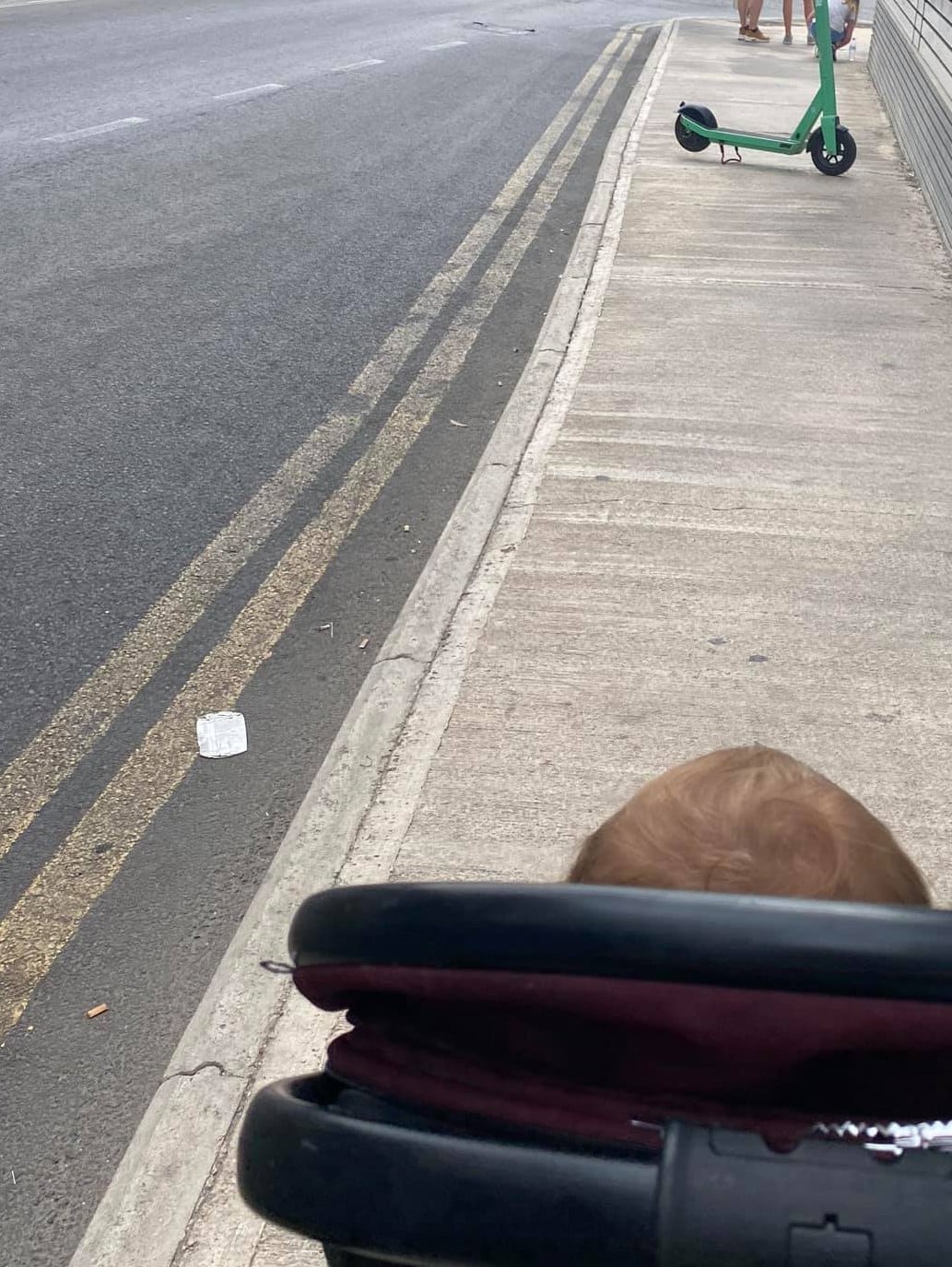
- E-scooter regulation: designated parking zones to prevent haphazard placement, regulated speed and usage to prevent accidents
Every one of these proposals could be implemented by the local council with existing authority. None requires new legislation. None requires significant funding. What they require is a council that treats residents as the primary stakeholders in their own streets - not an afterthought to commercial and governmental convenience.
Drone Privacy: Your Home Is Not Content
In November 2020, ResidentiBeltin published a 19-point framework for regulating drone operations in residential areas. The issue is not theoretical - Valletta's narrow streets and rooftop terraces make it uniquely vulnerable to drone intrusion, and the proliferation of commercial drones for photography, delivery, and surveillance has created a new category of privacy violation that existing regulations do not adequately address.
The framework balances technology with rights:
- No-fly zones over densely populated residential areas, with geofencing technology integrated into drone firmware
- Opt-in/opt-out system: residents choose whether drones may fly over or near their property, facilitated through a digital registration platform
- Permission-based operation: digital platforms where operators must obtain explicit consent from property owners before flying within a specified distance
- Advance notification: residents alerted about planned drone operations in their area before they happen
- Local bylaws requiring drone operators to obtain consent from property owners, with clear consequences for non-compliance
- Privacy-enhanced drones: adjustable cameras or restricted field of view in residential zones
- Government-funded privacy screens for property owners to limit aerial views of private spaces
- Neighbourhood associations empowered to establish their own drone-use guidelines
- Clear reporting mechanisms for residents to report drone privacy breaches to local authorities
- Enforcement and penalties for non-compliant operators, with emergency exemptions for search-and-rescue or disaster response
The principle is straightforward: your rooftop, your courtyard, your bedroom window are private spaces. A camera in the sky does not change that. The fact that drone technology exists does not create a right to use it without consent over people's homes.
Tourist Loudspeakers: The Right to Quiet in Your Own City
In November 2023, ResidentiBeltin addressed a specific and growing irritant: tourist guides using amplified loudspeakers in residential streets. The proposal was direct - reduce the volume, enforce limits, and recognise that residential zones are not performance venues.
The arguments were practical:
- Residential serenity: people who live in Valletta have a right to peace in their own homes, regardless of how many tour groups pass through their street
- Better tourist experience: lower volumes encourage more intimate, authentic encounters with the city rather than a broadcast tour
- Resident-tourist relations: when residents are not irritated by constant amplified noise, they are more welcoming to visitors - which benefits everyone
- Regulatory compliance: existing noise regulations already limit amplified sound in residential areas - they simply need to be enforced
This is not about silencing tourism. It is about the basic proposition that the people who live in a place should not be subjected to amplified commercial noise in their own streets, on their own doorsteps, during their own daily lives.
Against Clientelism: A System That Works for Everyone
In February 2015, ResidentiBeltin named the problem that underpins so many of Valletta's failures: clientelism. The selective distribution of favours, permits, and services to the politically connected while ordinary residents are trapped in bureaucratic circles.
The movement's position is clear:
- Clientelism is the product of a broken system that benefits only a few
- Justice must be delivered to those who were genuinely deserving - both in the past and present
- The locality should operate under a clean system that works for the entire community, year-round, in favour of residents' rights
- Only through such a system can true equality and transparency be achieved
- The treatment of Valletta residents as second-class citizens - trapped in endless bureaucratic loops while the connected get fast-tracked - must end
Nobody is against balanced progress. The question ResidentiBeltin has asked since 2015 is the question that still has no answer: where is the progress for residents?
We are not against progress. We never were. But every time they announce a new hotel, a new concession, a new commercial development - we ask the same question: where is the clinic? Where is the elderly home? Where is the parking? Where is anything for us?
- ResidentiBeltin, 2019
Strength in Numbers
ResidentiBeltin has consistently encouraged Valletta residents - especially elderly homeowners - to join the Home Owners Association to strengthen their collective voice. The logic is simple: individual complaints are ignored; organized communities are harder to dismiss.
The broader point applies to every proposal on this page. None of these ideas failed because they were impractical. They failed because the people proposing them had no institutional power, and the institutions with power had no interest in listening. The fight for residents' rights in Valletta is ultimately a fight for the democratic principle that the people who live in a place should have a say in how it is governed.
That fight continues. We never stopped. And we never will.