Walk through Valletta today and count what is missing. Not the buildings that fell to Luftwaffe bombs in 1942 - those losses are history. Count the buildings that survived the war, survived decades of neglect, and are now being handed to private developers on 65-year concessions. That is not history. That is a choice being made right now, in our name, without our consent.
Since 2001, ResidentiBeltin has documented what happens to Valletta's public heritage when residents are not consulted. The pattern is consistent: a historic building falls into disuse, the government declares it too expensive to maintain, and a concession is quietly arranged. The building becomes a hotel, a luxury residence, or a commercial venue. The community gets nothing.
This is not abstract. These are specific buildings with specific histories, and we can name every one of them.
The Royal Opera House - 80 Years of Broken Promises
On the evening of 7 April 1942, Luftwaffe bombers destroyed one of the finest theatres in the Mediterranean. Designed by English architect Edward Middleton Barry - the same architect behind London's Covent Garden - the Royal Opera House had opened on 9 October 1866 with seating for 1,095. It survived a devastating fire in 1873, was rebuilt, and reopened in 1877. It did not survive the war.
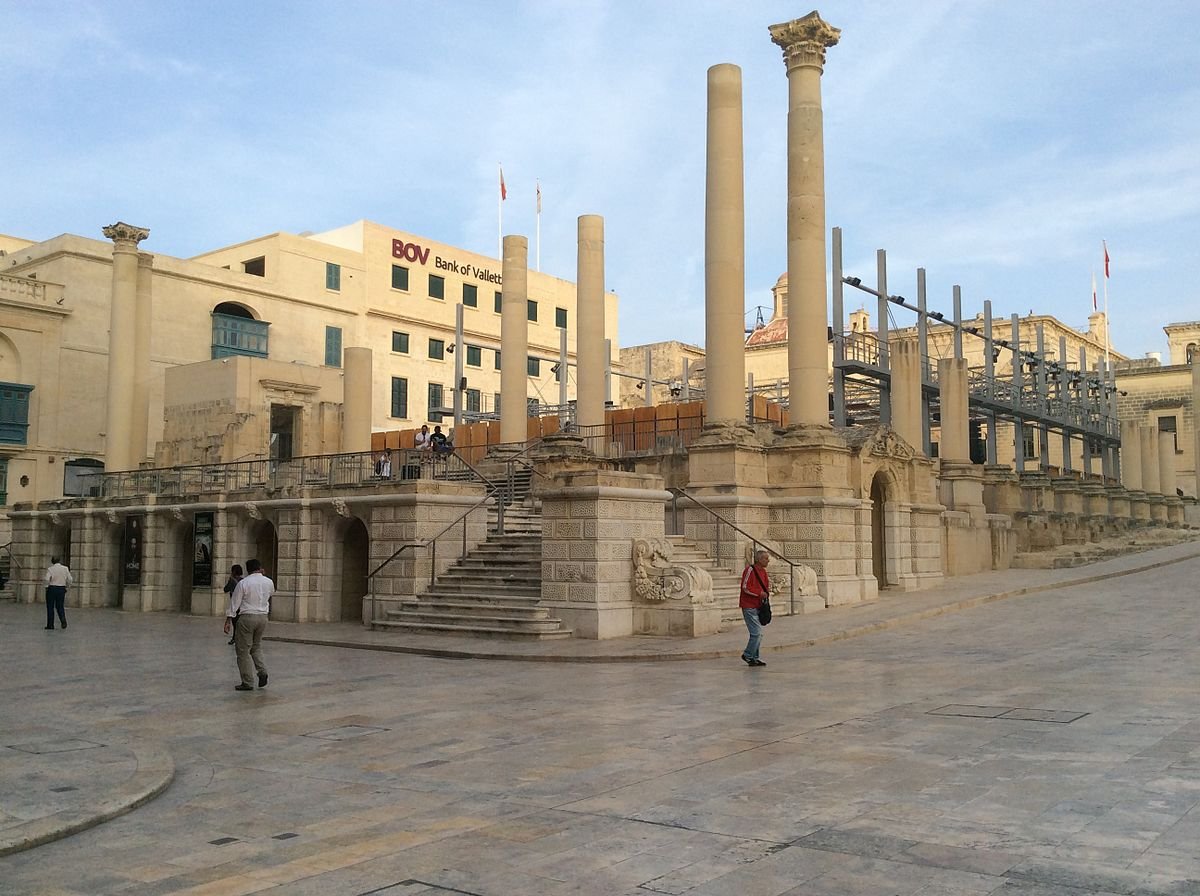
What followed the bombing was not reconstruction. It was decades of proposals, committees, budgets allocated and never spent, and architects commissioned and then ignored.
- 1953: Six architectural designs submitted. One selected. Project shelved after change of government.
- 1955-56: GBP 280,000 budgeted for reconstruction. Never used.
- 1957: Project shelved entirely. After 1961, all references to the theatre removed from development plans.
- 1990: Renzo Piano's plans approved. Never executed.
- 1996: Labour Government announced a millennium cultural complex. Never realized.
- Late 1990s: Architect Richard England commissioned to design a cultural centre. Abandoned.
- 2006: Government proposed a House of Parliament on the site - the public expected a cultural institution.
- 2013: Renzo Piano's open-air theatre inaugurated as Pjazza Teatru Rjal. The ruins remain roofless.
The open-air performance space that exists today is not what generations of Maltese people were promised. It is a compromise born from decades of political failure. The broader Piano project - including City Gate and the new Parliament - cost EUR 80 million. The Opera House itself was never rebuilt.
ResidentiBeltin first proposed the full reconstruction of the Royal Theatre in February 2014. The proposal was simple: rebuild it in its original form. The theatre would serve local, national, and international talent. It would complete Valletta. Instead, the site remains an open wound in the city's fabric - a reminder not of wartime destruction, but of peacetime indifference.
Fort St. Elmo - Restored on Top, Crumbling Below
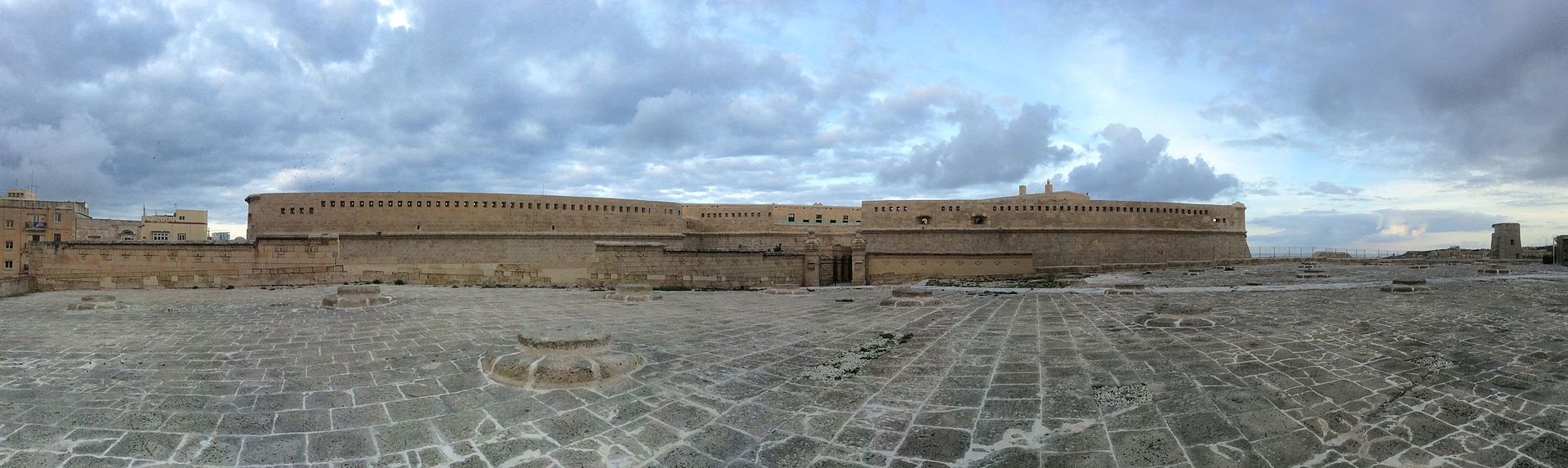
Fort St. Elmo is where Malta's story begins for most of the world. Built from 1552 by the Order of Saint John, it held against the Ottoman siege for 28 days in 1565 before falling on 23 June. No defending knights survived. The fort's sacrifice bought the time that saved Malta.
In 2008, the World Monuments Fund placed Fort St. Elmo on its list of 100 Most Endangered Sites. A EUR 15.3 million EU-funded restoration followed, completed in 2014. The National War Museum reopened in May 2015 with a collection spanning from the Bronze Age to 2004.
That is the version tourists see. Here is the version they do not.
The lower fort - the section that served as a prison, the location where the 1978 film Midnight Express was shot - was cleaned in 2015 but has since returned to a dilapidated state. It is not open to visitors. Conservation work on these areas remains unfunded. Meanwhile, the Police Academy occupies a significant section of the fort, limiting public access to what should be an entirely public monument.
ResidentiBeltin's 2020 proposal called for full transparency regarding every piece of heritage property within Valletta. The specific demands for Fort St. Elmo were clear: prevent privatization, implement a comprehensive restoration plan for the entire fort - not just the tourist-facing sections - and consider community uses for the spaces currently closed off. The proposals included sports facilities, community event spaces, a carnival village, and a rooftop garden open to residents.
Evans Building - The Fight That Defines Valletta
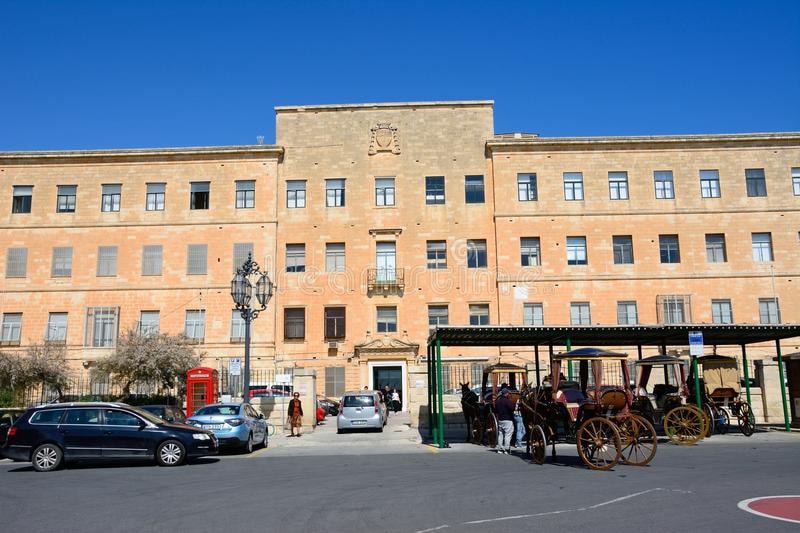
If one building captures everything wrong with how Malta treats its capital's residents, it is the Evans Building. Built in 1952 as university laboratories near Fort St. Elmo, it later housed public health facilities before falling into disuse. The site contains significant buried heritage - remains of the Nibbia Chapel, a Chapel of Bones, and an Anatomical Theatre.
Since 2011, ResidentiBeltin has proposed one thing for this building: keep it for the community. The proposal was specific - an elderly care home modelled on San Vincenz de Paul, a 24/7 walk-in clinic, a childcare centre, ambulance services, and a one-stop government services hub. The proposal detailed everything from parking layouts to the medical units that Valletta's aging population desperately needs.
Instead, in November 2022, the government issued a call for a 65-year works concession to convert the Evans Building into "superior quality tourism accommodation." Estimated contract value: approximately EUR 300 million.
Twenty-one bids came in. The leading bid, from the Valletta Luxury Projects consortium - linking Eden Leisure Group and Iniala - claimed EUR 78 million over 65 years. But their electronic submission listed only EUR 1.2 million as the grand total. The evaluation committee allowed the figure to be amended after bids were opened.
In February and March 2024, ResidentiBeltin organized protests against the privatization. The argument was straightforward: Valletta has been turned into an entertainment zone while residents' actual needs - healthcare for the elderly, childcare, emergency services - have been systematically neglected.
On 12-13 March 2026, the Public Contracts Review Board annulled the award to VLP, ruling that the evaluation committee had unlawfully permitted the bid amendment - a violation of equal treatment in public procurement. The PCRB ordered a fresh financial evaluation.
But the fight is not over. A subsequent audit found that Plan Property Holdings Ltd, now positioned as a potential winner, did not follow prescribed accounting standards in their financial statements. Rival bidders are preparing Court of Appeal challenges. The concession remains unresolved.
We were the first to demand that Evans Building stay in public hands - and we remain determined. Every government and every opposition since 2011 has been told what residents need. Not one has delivered.
- ResidentiBeltin, proposal document, 2019
The Evans Building petition remains active in the Maltese Parliament (Petition No. 163). As of March 2026, the building's fate is still undecided. What is decided is what Valletta's residents want: a community facility, not another hotel.
Il-Pixkerija - From Fish Market to Luxury Concession
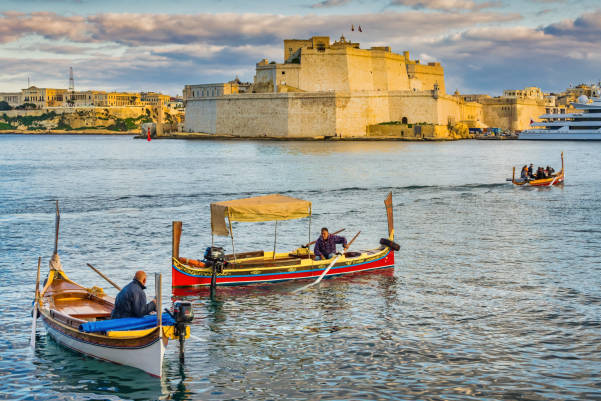
Built in the 1860s at Barriera Wharf, il-Pixkerija was Valletta's wholesale fish market - a place where fishermen sold their daily catch by public auction, looking out across the Grand Harbour toward Fort St. Angelo and the Three Cities. The building is classified as a Grade 2 scheduled property. It cannot be demolished. But it can be handed over.
As early as 2012, MaltaToday reported the Pixkerija was earmarked for a boutique hotel conversion under the Barriera Wharf regeneration project. ResidentiBeltin responded with a counter-proposal in 2011: keep the Pixkerija for the people. Their plan called for ferry and dgħajsa services, a space for the traditional boatmen who still operate, a tourist information office, public restrooms, a bus stop, and a kafetterija - all under one roof, serving residents and visitors alike while protecting the public coastline.
The government chose a different path. In March 2023, a call went out for a 65-year concession - but not just for the fish market building. The concession covers the Pixkerija, the current Ministry for Energy building, three Grand Master Pinto stores, the former Quarantine Hospital (a Grade 1 heritage building), and a section of seashore larger than two football fields for a yacht marina.
Only two bids were received. The higher bid - EUR 38.5 million from the Carmelo Stivala Group, headed by the president of the Malta Developers Association - was announced as the preferred bidder in October 2024. The consortium employs former Prime Minister Joseph Muscat as a consultant. The second bidder, Bonnici Brothers Ltd, filed an objection citing lack of transparency.
Meanwhile, the Malta Hotels and Restaurants Association and the Malta Chamber have both stated the island already has an oversupply of hotel capacity. The question is not whether Malta needs another luxury hotel. The question is whether Valletta's waterfront heritage belongs to its people or to concession holders.
The Ancient Biccerija - A Rare Success Story, with Caveats
Not every heritage story in Valletta ends with privatization. The old Biccerija - the ancient civil abattoir built in 1636 under Grand Master Lascaris near Strait Street - became something genuinely useful: the Valletta Design Cluster.
The building's journey was long and painful. Originally an abattoir where all Valletta's butchering was mandated to take place, it later served as soldiers' barracks, then housed cotton spinning operations and bakeries whose ovens remained operational into the late 1980s. Residents were evicted in the 1980s when the site was earmarked for demolition and redevelopment into housing - plans that never materialized. By the 2010s, most of the roof had collapsed.
ResidentiBeltin proposed in 2002 that the building be converted into independent living apartments for elderly residents who wanted to downsize from larger homes, combined with social services and community activity spaces. The government chose a different direction.
In June 2015, as part of the Valletta 2018 European Capital of Culture programme, the conversion into a design cluster was announced. Renovation began in 2017. After multiple delays, the Valletta Design Cluster was inaugurated on 24 March 2021, at a cost of EUR 10.4 million (including EUR 4.3 million from EU structural funds). It now houses makerspaces, coworking areas, fifteen studios, meeting rooms, artist residencies, and a publicly accessible roof garden.
This is a better outcome than a hotel. The building serves a public cultural function, managed by the Valletta Cultural Agency. But ResidentiBeltin's original point stands: elderly Valletta residents still have no dedicated care facility in their own city. The need the 2002 proposal identified has not been met - it was simply redirected elsewhere, and the elsewhere never arrived.
The Heritage Trail - Preserving What Remains
In June 2012, ResidentiBeltin proposed a Heritage Trail for Valletta - a guided route connecting the city's surviving cultural landmarks, traditional businesses, and historic sites. The proposal was not just about tourism. It was about recognition: naming, documenting, and protecting what makes Valletta irreplaceable before it disappears.
The proposal outlined five steps: systematic research and documentation of endangered cultural sites; community involvement through petitions and public consultation; engagement with cultural authorities and preservation agencies to create mapped heritage routes; leveraging the trail for quality tourism that benefits the local economy; and dedicated funding through start-up grants and voucher systems to support the iconic businesses that anchor the trail.
Alongside the trail proposal, ResidentiBeltin called for incorporating major NGOs - Din L-Art Ħelwa, Moviment Graffitti, Friends of the Earth Malta, and others - into local council structures, with the explicit goal of having Valletta's UNESCO World Heritage status genuinely protected rather than used as a marketing badge.
The Pattern
Step back from the individual buildings and the pattern is unmistakable:
- The Royal Opera House: 80 years of failed promises, never rebuilt.
- Fort St. Elmo: Tourist-facing sections restored with EU money; the rest left to crumble, partly occupied by the Police Academy.
- Evans Building: Community demanded elderly care and a clinic since 2011. Government issued a 65-year hotel concession in 2022. Still unresolved after procurement scandals.
- Il-Pixkerija: Community proposed public maritime facilities and boatmen services. Government issued a 65-year concession covering the fish market, a Grade 1 hospital, and public seashore.
- The Biccerija: Community proposed elderly housing and social services. Government built a design cluster. Better than a hotel - but the elderly care need remains unmet.
In every case, residents proposed community uses. In every case, the government chose something else. In most cases, that something else involved private concessions, commercial development, or both.
This is not about opposing development. ResidentiBeltin has never opposed restoration. The organisation has opposed the systematic conversion of public heritage into private commercial assets while the people who live in Valletta - the people whose ancestors built these buildings and defended them during the Great Siege and the Second World War - are denied the community services every other locality in Malta takes for granted.
Valletta has no dedicated elderly care facility. No 24/7 clinic. No childcare centre. What it has is an ever-growing inventory of boutique hotels and luxury concessions operating inside buildings that belong to the Maltese public.
The heritage is not vanishing by accident. It is being reallocated - from community to commerce, from residents to concession holders, from the public to the private. And it is happening building by building, concession by concession, in plain sight.
Continue Reading
Traditions Under Siege
Festas disrupted by commercial noise. Communities hollowed out by displacement. The culture that made Valletta is fading.
SolutionsThe 5-Pillar Framework
What needs to change and how to pay for it. Four draft bills, self-financing through developer taxes, zero new burden on families.